
年代秀
RTX 4080 12GB被骂取消:RTX 4070再砍一刀_我的网站

一 |
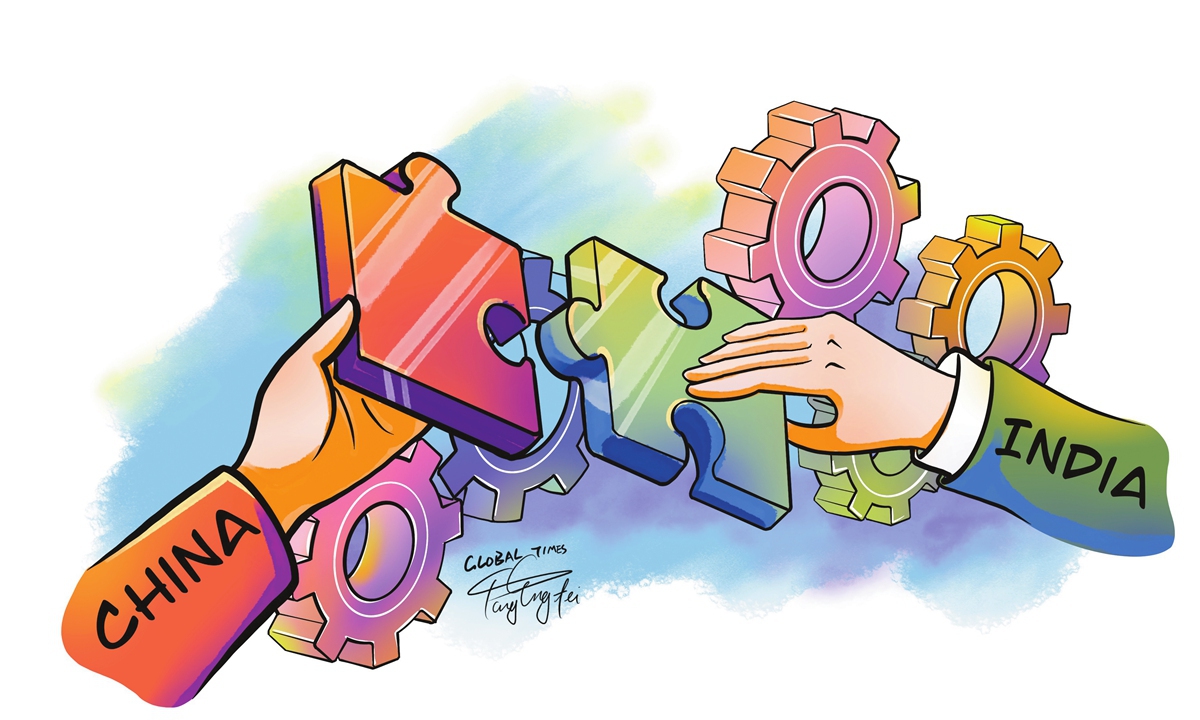
Some Indian media outlets and regional political forces have recently sought to amplify allegations of an unverified China-India border confrontation, while official signals from Beijing and New Delhi have emphasized stability, communication and the importance of managing differences through established mechanisms.
The contrasting narratives have emerged at a moment when exchanges between China and India in various fields have gradually resumed, and cooperation has been advanced in an orderly manner, Chinese experts noted, warning that sensationalizing border-related claims could disrupt the hard-won momentum in bilateral ties and the two countries should prevent the boundary question from hijacking their broader relationship.
Contrasting narratives
The latest media speculation was partly triggered by claims made by the People's Party of the so-called "Arunachal Pradesh" (PPA), a regional Indian political party. According to The Arunachal Times, a local Indian newspaper, a four-member PPA "fact-finding committee" led by former minister and party adviser Kahfa Bengia visited the so-called "Taksing area" (known as Taxin, in Zangnan, Southwest China's Xizang Autonomous Region) on July 10 and subsequently alleged that Indian forces had been prevented from accessing several patrolling points.
The claims were then amplified by Indian news outlet ThePrint, which reported on Tuesday, citing unnamed sources, that Chinese and Indian patrols had allegedly come "face to face" near Taxin in late July.
The outlet further claimed that Chinese personnel subsequently left before returning in early August and setting up "two or three tents."
However, ThePrint acknowledged that sources in India's defense and security establishment said the "situation was well under control."
Some other Indian reports have also questioned the sensational allegations. India Today reported on Wednesday that Indian government sources dismissed social media claims circulating about what was described as "slow encroachment," while noting that similar allegations regarding the area had previously been rejected by local authorities and the Indian Army.
In fact, the claims stand in contrast to the official diplomatic signals coming from both sides.
Asked on Tuesday about reports concerning the border, Indian Ministry of External Affairs spokesperson Randhir Jaiswal said New Delhi takes border matters seriously and reiterated India's position that "the state of the border affairs will reflect on the state of our larger bilateral ties," according to a media briefing released by the ministry on its website on Tuesday.
He also referred to existing mechanisms for dealing with border issues and preventing misunderstanding and miscalculation, according to the briefing.
Responding on Wednesday to questions from Bloomberg and Reuters concerning social media claims about stepped-up Chinese military activity and a possible new border incident, Chinese Foreign Ministry Spokesperson Guo Jiakun said, "The China-India border situation is generally stable at the moment."
"China and India held the 36th meeting of the Working Mechanism for Consultation and Coordination (WMCC) on China-India Border Affairs last week. The two sides agreed to maintain communication via diplomatic and military channels and jointly uphold peace and tranquility in the border areas," Guo said.
Qian Feng, director of the Research Department at Tsinghua University's National Strategy Institute, told the Global Times on Thursday that the fact that the two sides continue to communicate through established channels shows that the border situation has not developed in the direction of escalation portrayed by some Indian media.
Such hype also came amid another development concerning Zangnan. India on August 7 announced what it called "standard" names for 27 locations in so-called "Arunachal Pradesh," a move that some Indian media outlets portrayed as an effort to counter China and further connected with the latest reports of border tensions.
China has firmly rejected the move. Responding to the issue on Monday, spokesperson Guo said, "Zangnan region is China's territory. China does not recognize the so-called 'Arunachal Pradesh' illegally set up by India."
Guo said India's attempt to replace names long used by China with its so-called "standard names" is "illegal, null and void," and stressed that it would not change the fact that Zangnan belongs to China.
Hu Zhiyong, a professor from Zhejiang International Studies University and a research fellow at the Institute of International Relations at the Shanghai Academy of Social Sciences, told the Global Times on Thursday that border and security issues have traditionally been susceptible to political manipulation in India's domestic politics. "When domestic economic and social problems become difficult to address, issues involving the borders with China or Pakistan can easily be pushed to the forefront to divert public attention," Hu explained.
He said economic pressures, concerns over foreign investment and the domestic business environment, together with accumulated public sentiment, could provide incentives for some political forces to magnify external disputes.
Hu argued that another problem lies in the tendency of some Indian political figures to bind the boundary question too closely to the entire China-India relationship. "The boundary issue is one part of bilateral relations, which also encompass political, economic, diplomatic, security and people-to-people exchanges," Hu said. "It should not be allowed to hijack the entire relationship."
Dialogue matters
According to the Chinese Foreign Ministry's statement of the August 6 meeting, the two sides conducted constructive dialogue in a candid and friendly manner, had an in-depth exchange of views on further implementing the consensus reached during the 24th Round of Talks between the Special Representatives of China and India on the Boundary Question, and agreed to jointly prepare for the coming 25th Round of SR talks. The two sides also discussed boundary delimitation, border management, mechanism development, cross-border exchange and cooperation. The two sides agreed to continue to maintain diplomatic and military communication, and jointly safeguard peace and tranquility in the border areas.
Hu pointed out that the timing of the latest speculation is noteworthy, as border issues have at times been used by some forces in India in an attempt to gain leverage ahead of important bilateral interactions.
The 36th WMCC meeting demonstrates that the two sides possess functioning channels through which disagreements can be addressed. This is particularly important as China and India seek to sustain the improvement in relations and prepare for further high-level interactions, said Chinese observers.
"The boundary dispute is a complicated issue left over from history and cannot be resolved overnight," Qian said. "What matters is to keep diplomatic and military communication channels open, promptly handle frontline frictions through established mechanisms, expand people-to-people exchanges and strengthen coordination under multilateral frameworks such as BRICS and the SCO."
。 高不成低不就、不伦不类的RTX 4080 12GB在一片骂声中取消了发布,那么它是换个身份归来,比如说改名为RTX 4070 Ti或者RTX 4070,还是彻底消失呢?据曝料大神MLID得到的情报,RTX 4080 12GB在官宣取消的时候,刚刚才开始投产,所以对AIC厂商的影响并不是很大,只是打乱了未来的市场规划,需要重新调整。

二 | 同时,也没有任何媒体或渠道拿到新卡,除了极少数样品可能流出,但没有看到被曝出。至少在可预见的未来一段时间内,RTX 4080 12GB 7680 CUDA核心/192-bit 21GHz显存的这种配置不会再出现,甚至不排除永远不会有。那么,RTX 4070 Ti、RTX 4070会是什么样呢?MLID认为,NVIDIA极有可能会将AD104核心的规格再屏蔽一些规格,做成RTX 4070,否则等于承认RTX 4080 12GB本来就是RTX 4070,面子上过不去。RTX 4070 Ti暂时不清楚,按说应该会在第二批规划中,或许会使用精简版的AD103核心。MILD还给出了一组RTX 4070 FE公版的渲染图,相当于RTX 4090 FE的缩小版,整体设计类似,但缩小到2插槽体积:。
Current article:http://nh3acaz.zeitujiangshaopen.pics/list_70tcd/t6yxb.html
Published on:02:49:00
我的网站相关内容
 国际观察:警惕美国网络间谍活动破坏全球安全
 Loupedeck照片编辑器控制器宣布支持Photoshop
 百家机构扎堆调研股曝光 2股市盈率低至个位数
 前英格兰门将:若加克波或迪亚斯离队,利物浦可引进三笘薰
 Prisoners in Ecuador take 57 guards and police hostage as car bombs rock the capital
 新加坡平价日本两元店!全场$2.30起,零食、服饰、家居好货全都有
- ·新一轮国补官宣继续!国补政策2026年最新消息:第三批625亿国补申领中!买手机平板电脑3C数码国补15%叠加京东开学季校园教育优惠活动,学生换新时机到了!
- ·最新六个月期国库券收益率降至3.13%
- ·迪马利亚谈阿根廷遭FIFA重罚:太夸张,认为最终禁赛的场次会轻些
- ·混在朝鲜(785)在朝鲜入住高档涉外酒店
- ·联合开发部:与小米合作良好,不停产
- ·“新跨越 新起点 新征程”北汽集团正式交付第4000万辆整车
- ·美日澳联合军演在即,针锋相对?外媒:解放军运9高新迫近琉球,惯性世界,原创 美日澳联合军演在即,针锋相对?外媒:解放军运9高新迫近琉球
- ·在泉州读懂不一样的七夕:敬奉七娘妈、十六岁“洗契”、吃酒窝糖粿
我的网站最新内容
- ·编译器界大地震!LLVM 23.1正式发布:AMD Zen 6上车、NVIDIA Rigel提前适配
- ·连江:船进港人上岸 关停景区景点
- ·毕丹星要求和易华仁案一样于高庭受审 高庭法官下个月裁决
- ·《促进网信企业高质量发展行动计划(2026-2030年)》印发
- ·广东开展森林消防“以水灭火”实战拉练
- ·朝鲜比中俄说得更直白,日本有案底在身,敢轻举妄动就是死路一条,兵器评论,原创 朝鲜比中俄说得更直白,日本有案底在身,敢轻举妄动就是死路一条
- ·云南鲁甸逾12万亩苹果丰产热销国内外,云南鲁甸逾12万亩苹果丰产热销国内外
- ·Oklahoma attorney general sues to stop US's first public religious school
- ·第五人格IVL:北京WBG_N1e红蝶手感火热拿下四抓,助队伍破冰获胜
- ·今年二季度,云南省以工代赈带动24.24万名群众就业增收
- ·每体:巴萨决心签左脚中卫,为确保比赛时间科尔特斯需离队
- ·南票区开展消防安全大演练
- ·浙江:“个人身后金融事” 一站式查询便民落地,浙江:“个人身后金融事” 一站式查询便民落地
- ·名记:科尔希望库明加提升组织能力 做到快速阅读比赛&减少停球
- ·卡斯尔:文班休赛期难以捉摸 社媒常晒奇特地点
- ·首批41个典型场景启动建设 “人工智能+交通运输”加速落地
我的网站热点内容
- ·“Chinamaxxing”火了,外国人的福建之旅如何“Maxxing”?
- ·AI“点亮”半年报 智能消费持续扩容
- ·包含大六座百万级旗舰产品 阿维塔将在2030年内推出17款全新产品
- ·Tight hug after 27 years: Reunion across ocean, marking China-US folk friendship
- ·暴力电四门!梅赛德斯-AMG GT 四门轿跑车低伪实车发布
- ·全区统筹推进“安全生产滨城行”走深走实
- ·卡迪夫大学新研究:AI 尚无法像人类教师一样可靠地批改作业
- ·西区!持械打劫!又是珠宝店!
- ·36 South Sudanese students awarded Chinese ambassador scholarship
- ·【芸能 覆面座談会】自民 衆院選で歴史的圧勝 高市一強に野党どう対抗?
- ·ESPN预测新季排名:马刺62胜联盟第一 76人火箭第4勇士附加赛
- ·拼多多直通车优化技巧
- ·接举报“甲醛白菜”问题,中农批宿迁市场通报检测结果:在举报人见证下,两次检测均合格,市场内所有库存大白菜就地封存
- ·买量金融学(二):AI投放就能“稳赚不赔”?
- ·涉毒男子反锁屋内 警方入屋发现男子昏迷
- ·China-aid training alumni workshop focuses on boosting rice yields in Sri Lanka